
learncloudassignment.online

Blog

Your blog category

ableventure (91)
Blog

Hiring for Potential vs Hiring for Experience: Why Most Indian Companies Get This Wrong

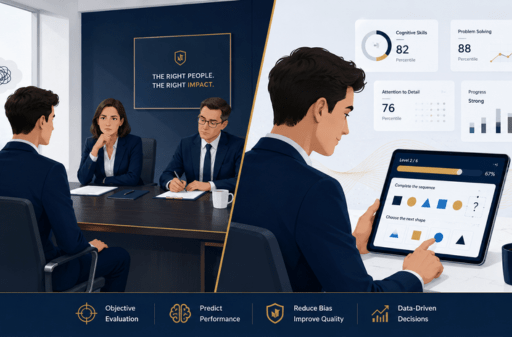
There is a hiring decision that plays out every week in Indian organisations, at every level and in every sector. A shortlist arrives. One candidate has eight years of directly relevant experience, a recognised employer on the CV, and references who confirm solid performance. Another candidate has four years of experience, an unconventional background, and assessment data suggesting exceptional learning agility and problem-solving capacity.

ableventure (89)
Blog

Why Learning Assessment Should Be Your First Investment Before Any Training Spend

Every year, Indian organisations commit significant budgets to training. Vendor proposals are reviewed, programmes are selected, schedules are confirmed, and employees are pulled from their work to attend. The money is spent. The calendar is cleared. And then, months later, when someone asks what changed as a result, the most honest answer in the large majority of cases is: not much that we can point to with evidence.

ableventure (88)
Blog

Leadership Development for Women in Indian Corporate: Breaking the Pipeline Leak

The data is not ambiguous. Women in Indian corporate represent roughly half of all entry-level hires. By the time the pipeline reaches senior management, that proportion has narrowed significantly. By the time it reaches the C-suite, women hold just 17 percent of positions. This is not a reflection of the talent available. It is a reflection of a system that, despite over a decade of stated commitment to gender diversity, continues to lose women from the leadership pipeline at a rate that no amount of campus recruitment can compensate for.

ableventure (83)
Blog

How to Design a Succession Planning Framework for Growing Indian Companies

A manufacturing firm in Pune recently lost its operations head to a competitor. Three months later, a Bengaluru-based fintech startup saw its VP of Product resign without notice. In both cases, the organisations scrambled. Projects stalled. Morale dipped. The hiring process took longer than expected, and institutional knowledge quietly walked out with the people who left.

ableventure (87)
Blog

Upskilling vs Reskilling: What Indian Companies Need to Prioritize in 2026 and Why

Indian organisations are entering 2026 with a workforce challenge that did not exist in this form five years ago. It is not a talent shortage in the conventional sense. The talent exists. The challenge is that a growing proportion of that talent, people who are performing competently in their current roles, are no longer fully equipped for the roles those jobs are becoming. Technology, automation, and rapidly shifting market demands are not replacing jobs wholesale. They are transforming them from the inside, layer by layer, skill by skill.

Scroll to Top